Exeter City Council’s new city centre strategy has much more in common with its clueless new cultural strategy than its decision to hold “consultations” on both at the same time suggests.
Its city centre strategy has also been beset with delays and procrastination, taking much longer to put together than the council said it would, leaving a four-year gap since the previous city centre strategy – which was adopted thirteen years ago – expired.
It, too, essentially ignores significant issues identified by the consultants commissioned by the council to gather evidence, and is also written in similar semantically-evasive language replete with vague aspirations but bereft of specific commitments, financial or otherwise, measurable outcome metrics or target timescales for their achievement.
Approval for the current “consultation” was also rushed through the council executive just before last month’s local elections without most of the committee members seeing the unpublished draft strategy first – and despite the council having no intention of adopting it until October.
And, like the cultural strategy, the city centre strategy also relies on a secretive sub-committee of the rebranded Liveable Exeter Place Board to lead its delivery, whatever that might mean, if anything. (An “action tracker” is apparently being “worked on” and will “eventually” accompany the strategy, but there is no indication of when.)
The strategy is similarly silent on the governance mechanisms with which this “Business Growth and Economy Group” sub-committee will oversee the city’s cultural organisations and practitioners – or offer any semblance of accountability in doing so.
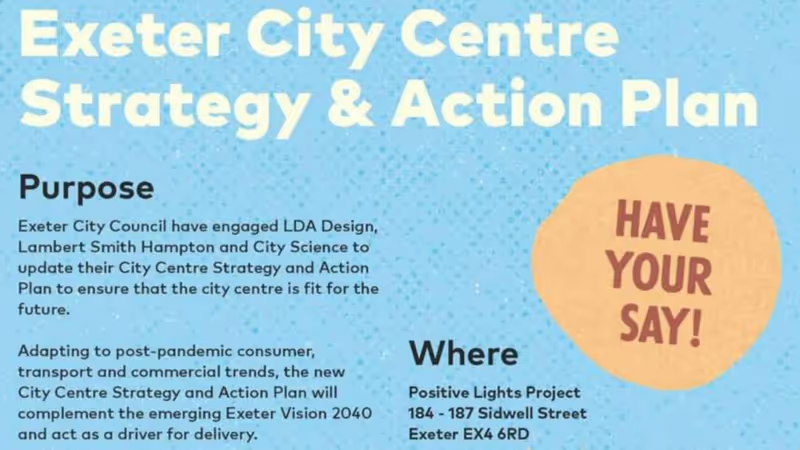 Exeter City Centre strategy July 2024 stakeholder workshops flyer
There is one important way in which the council’s approach to the two strategies differs, however. The consultants it commissioned to support the production of the draft cultural strategy produced two useful documents which actually capture much of the current state of Exeter’s cultural sector.
One, a baseline report, summarised the city’s cultural assets and partnerships, relevant economic and policy context, audience demographics, wider sector trends and the funding landscape. It also identified essential strengths and weaknesses and realistic comparison city benchmarking examples.
The other, an engagement assessment, combined one-to-one key sector stakeholder interviews, the findings of five workshops and more than 500 submissions to an open public consultation into a comprehensive evaluation of both audience and practitioner perspectives.
Both accentuated the positive. But neither shied away from the uncomfortable truths and significant challenges which beset Exeter’s creative sector.
The council also commissioned consultants to support the production of the draft city centre strategy. They held five workshops and produced what they called a “technical appraisal” informed by the workshops and some desktop research – at a cost of just over £47,000.
But they did not hold any in-depth interviews and, inexcusably, no open consultation took place to enable a wider range of city centre stakeholders to contribute what would have been legitimising perspectives to the strategy development process.
Council development director Ian Collinson, who is responsible for the strategy, nevertheless described this as “quite a lot of engagement” earlier this year.
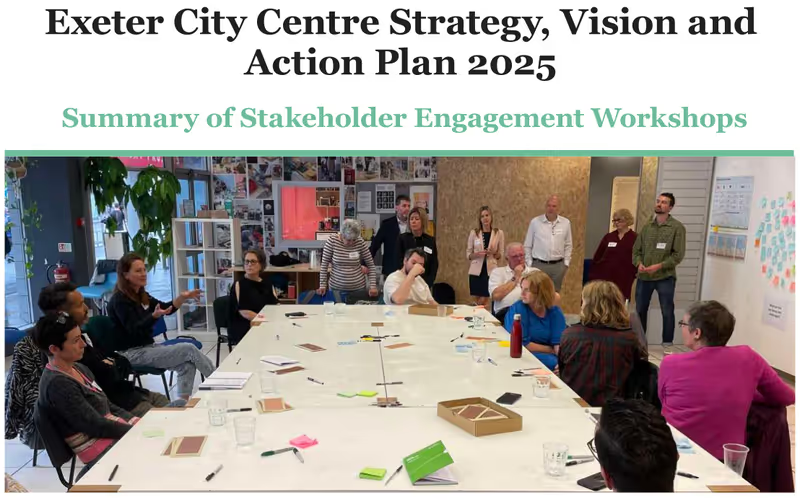 Exeter City Centre strategy July 2024 stakeholder workshops summary
The first four workshops took place in July 2024, nearly two years ago.
Billed as including “businesses, public sector institutions, educational organisations, stakeholders, cultural organisations, citizens’ groups and private developers” they actually had a much narrower range and reach.
A consultation list disclosed by Exeter City Council under freedom of information legislation shows that, of 101 people invited to participate, 25 worked for the city council, five for the county council and eight for the university.
Thirteen Exeter Chamber board members were also invited, along with eight property development firms and two representatives each from Global City Futures, the company behind Exeter City Futures, and 1 Energy, which intends to build an industrial heat plant in the Riverside Valley Park.
A total of 55 people attended the workshops, according to other freedom of information disclosures. Only eight of the city’s several hundred voluntary, community and social enterprise organisations took part.
The consultants’ report on the workshops nevertheless said that the consultation was “an opportunity to be an exemplary case of outcomes-led public engagement” which “brings the public, businesses and organisations closer to the council, embodying the collective endeavour that underpins the [city centre strategy] vision and action plan”.
Each workshop included three activities.
The first invited participants to identify issues and challenges on post-it notes and the second asked for responses to six questions posed by the consultants on “paper bricks” – similarly tiny pieces of paper seemingly inviting simple solutions to complex problems such as “how will we pay for it?”
Participants were then asked to pick what they would do first, which apparently “ensured the action plan would include the necessary steps to delivering their small and large-scale solutions”.
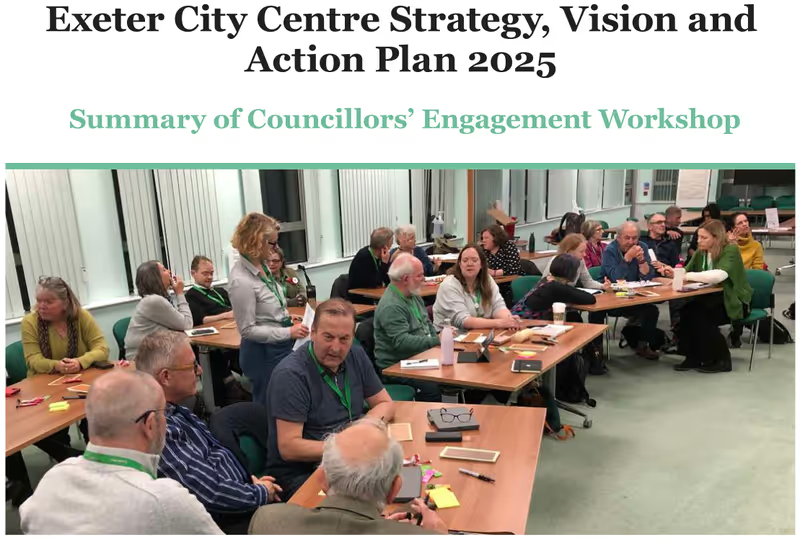 Exeter City Centre strategy November 2024 councillor workshop summary
The fifth and final consultation workshop then followed in November, eighteen months ago.
According to the consultants “around 30” city and county councillors attended. They were not asked to identify issues and challenges or to say what they might do in response. They were, instead, only asked to respond to the same six questions set at the earlier workshops.
The consultants’ summary report, exactly as their report on the earlier workshops had done, said a six-week public consultation which would be “open to the whole community” would subsequently be held “to ensure our engagement programme is inclusive and accessible”.
Both reports added that this consultation would follow the same format as the workshops, so respondents would “begin by identifying the key issues and challenges currently in Exeter city centre, before proposing solutions”.
Of course, no such thing has happened.
The council “consultation” on the draft city centre strategy – just like its simultaneous cultural strategy “consultation” – instead takes the form of a multiple-choice survey with a mixture of compulsory Likert scale and ranking options, a couple of pre-populated tick box exercises and five leading questions, responses to which are limited to less than 100 words,
One despairing resident told us he gave up trying to respond to the survey when it became “apparent that the only input possible is to rank pre-determined ideas” which did not leave him “with any confidence that input from the public will be reflected” in the final version of the strategy.
It’s the same story with the consultants’ workshops findings, which echo much that was said by respondents during the altogether more comprehensive cultural strategy engagement process.
“Exceptionally high” rents and a lack of affordable housing, congestion, poor transport infrastructure and excessive parking charges, declining footfall and the struggling evening and night-time economy as well as the need for a high-capacity concert hall, theatre and entertainment venue are all identified as key issues. But the council’s glossy strategy simply glides on by.
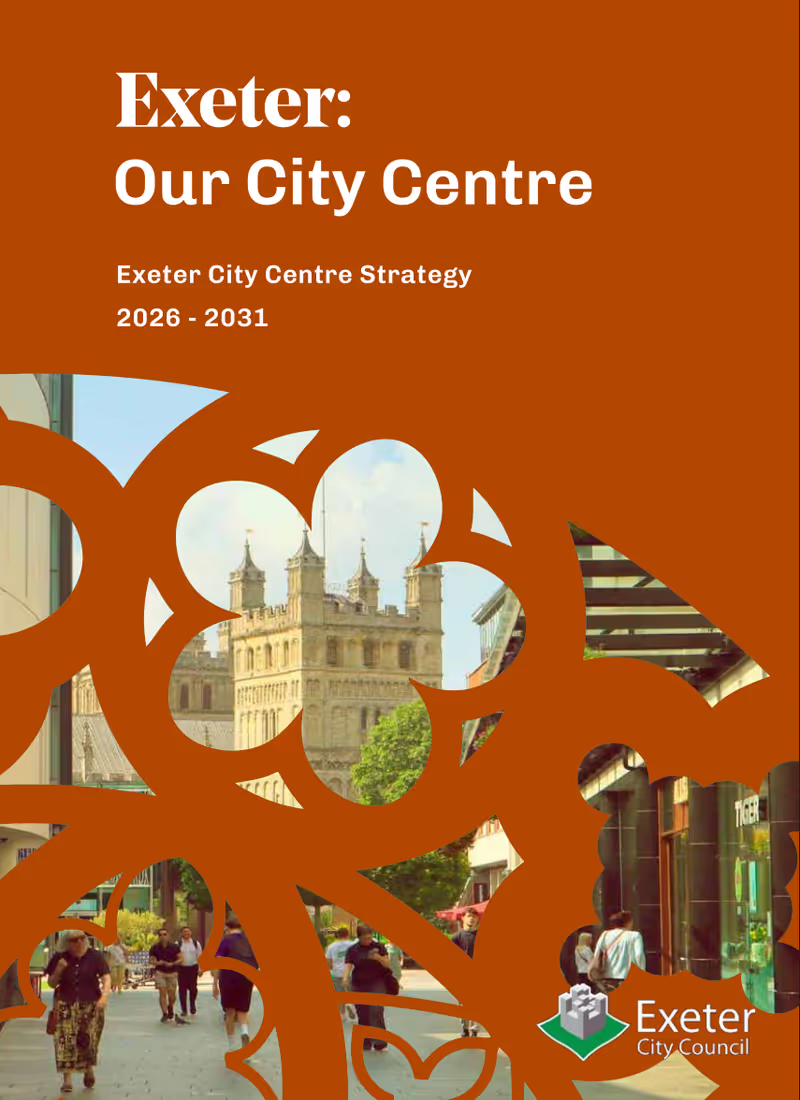 Exeter City Centre strategy 2026-31 consultation version
The consultants’ technical appraisal, meanwhile, despite defects which include citing global cities – six of which are capitals – with average populations more than fifty times larger as exemplars from which Exeter “must draw inspiration”, does make one salient point clear.
In a section on existing Exeter strategies, it cites a 2022 council list of ten “key documents” framed as “plans for the future” intended to “ensure the success of the city”.
These include Building Exeter Back Better, Liveable Exeter – A Transformational Housing Delivery Programme, A City Centre Vision for a Green Capital, Better Homes for Local People, South Street Urban Design Proposals, an Exeter Local Industrial Strategy and, remarkably, council leader Phil Bialyk’s 2021 budget speech.
The consultants’ report drily says, of these documents, which are notable chiefly for having little more impact than gathering dust since their publication: “Stakeholders told us that while these strategies had often identified the most appropriate objectives for the situation, they sometimes lack specific actions necessary for successful delivery.”
As with so many of its predecessors, and echoing the failings of its companion cultural strategy, the council’s new city centre strategy already looks doomed to overpromise, underdeliver and produce little discernible change.
The city council “consultation” on the draft Exeter City Centre Strategy 2026-2031 is open until Monday 29 June.