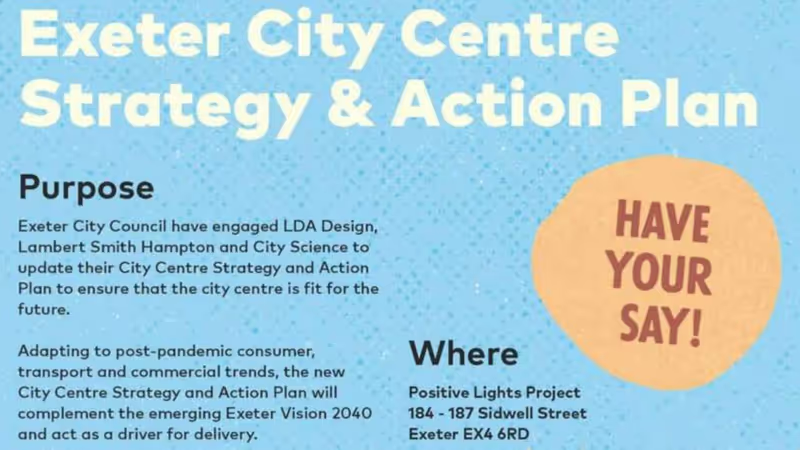
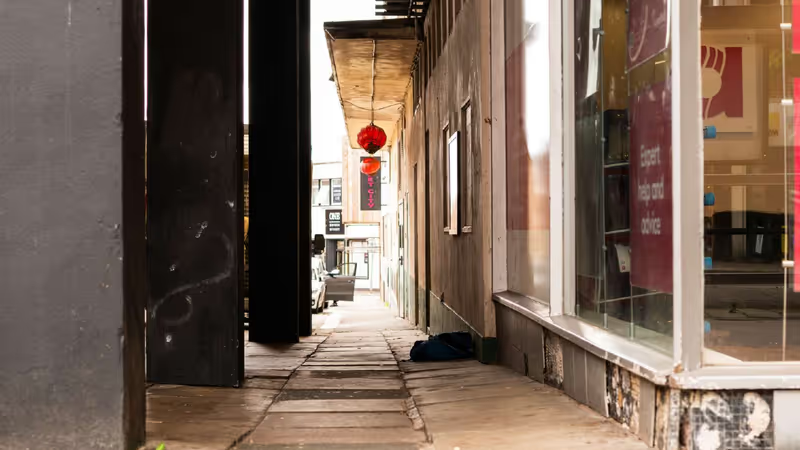
Exeter City Council started work on a new cultural strategy in May 2023. It originally said it would have a draft ready for consultation by the following May, two years ago, to enable its adoption before the preceding cultural strategy expired in July 2024.
But the timetable slipped, and the council subsequently only committed to agreeing the strategy’s scope by October 2024.
The council missed this deadline, too. It then said – in November 2024 – that it would discuss the strategy’s scope “with key partners and stakeholders” during the “next quarter” and produce a draft for consultation by June 2025.
More months passed. The secretive “Connected Culture” sub-committee of the rebranded Liveable Exeter Place Board, with the avowedly-elitist Charles Courtenay in the chair, became the new strategy’s steering group in January 2025 at the council’s suggestion, according to documents released under freedom of information legislation.
Meeting in private, without publishing records of its decisions or who was making them, it steered the strategy’s objectives, public engagement plan and development consultant procurement brief.
This went out to tender last summer. InPlace Consulting was appointed to the brief nine months ago, still without a draft of the strategy, or a consultation on that draft, in sight.
 Exeter Cultural Strategy 2026-31 baseline report
InPlace Consulting first worked up what it called a “baseline report of the cultural city we know”. The report does not shy away from some of the uncomfortable truths which face Exeter’s creative sector.
It acknowledges that arts, entertainment and recreation account for just 2% of employee jobs here, compared with 2.5% across the country, and that a significant decline in city centre evening footfall has been recorded since 2019 across all days of the week.
It also points out that annual Arts Council England funding for the city has fallen 16% since 2018 – from £2.15 million to £1.75 million – at the same time as it has risen 22% across the country, with Plymouth getting three times as much as Exeter despite being only twice its size.
In fact, Exeter receives less Arts Council funding per person than the nationwide average – £12.92 vs £13.48 in 2024-25 – and considerably less than some of its similarly-sized comparators. Gloucester and Ipswich both received more than twice as much that year – and Norwich got £65.44.
While the consultants celebrate some of the city’s cultural strengths, they also make clear that they are aware of plenty of weaknesses which will be all-too-familiar to those striving to help Exeter’s cultural economy succeed.
 Exeter “cultural summit” invitation
As a result, the consultants would not have been surprised by many of the 500+ submissions to a public consultation held at the end of last year in which respondents were invited to share their thoughts on Exeter creativity and culture.
They also interviewed twenty sector practitioners and ran three workshops in the run-up to a “cultural summit” held at Exeter College at the end of January at which they intended to share their initial findings about “the state of the city’s creative life and potential”.
In the event, however, the council’s announcement that it intended to submit a bid to become the next UK City of Culture, a year-long designation that has been awarded on a competitive basis every four years since 2013 by the Department for Culture, Media and Sport, overtook the proceedings.
City council development director Ian Collinson, whose installation as council culture lead speaks volumes, said that he and chief executive Bindu Arjoon had “sat down and said we needed a new culture strategy” twelve months before – although the council said it began work eighteen months earlier.
He added that they had responded to the new UK City of Culture bid window opening by thinking “why not do it?” because they were “doing the work anyway” on the new cultural strategy.
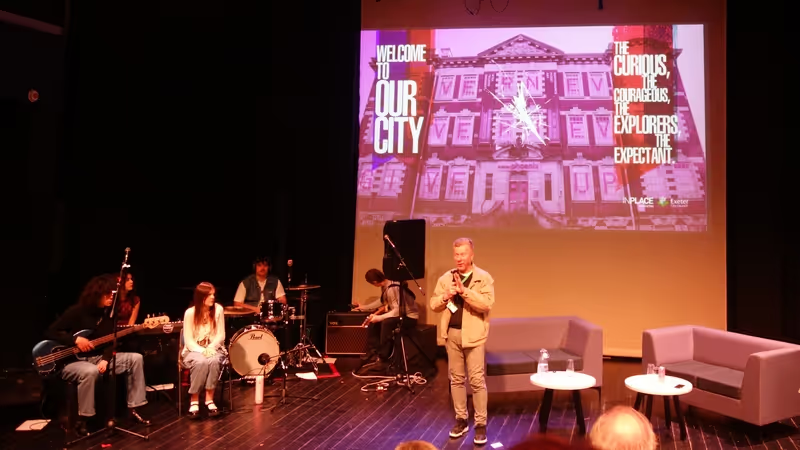 Ian Collinson speaking at Exeter College “cultural summit” in January 2026
Most of the few dozen creative practitioners who were present at the January event seemed astonished that the council had decided to pursue a bid. Several expressed considerable scepticism.
One said, prompting applause, that Exeter was not ready to submit a UK City of Culture application. They added that bid preparation work in other cities for this year’s competition had not just been going on for several years, but had been driven by a wide range of cultural practitioners and community members – and had not just been decided by two people.
It certainly appears that the council made its decision to bid at the eleventh hour. According to documents released under freedom of information legislation the “Connected Culture” sub-committee had only become the steering group for Exeter’s UK City of Culture bid a few weeks earlier, at the beginning of December.
And it looks like the bid wasn’t ready to go either. The “provocations” that the sub-committee discussed at its January meeting were still very much in initial draft form only a couple of weeks later when they were trailed at the January event, if the extent to which they were edited in the intervening fortnight is anything to go by.
The consultants subsequently said that their “experience” at the event – Ian Collinson later called it a “rich discussion” – prompted them to hold three additional workshops before they were prepared to publish their summary of what people had to say about the state of Exeter’s cultural sector.
As it turned out, the council bid didn’t even make it onto the longlist of places selected to compete for a place on the UK City of Culture shortlist – the same thing that happened when it submitted a joint bid with Torbay Council in the previous competition in 2021.
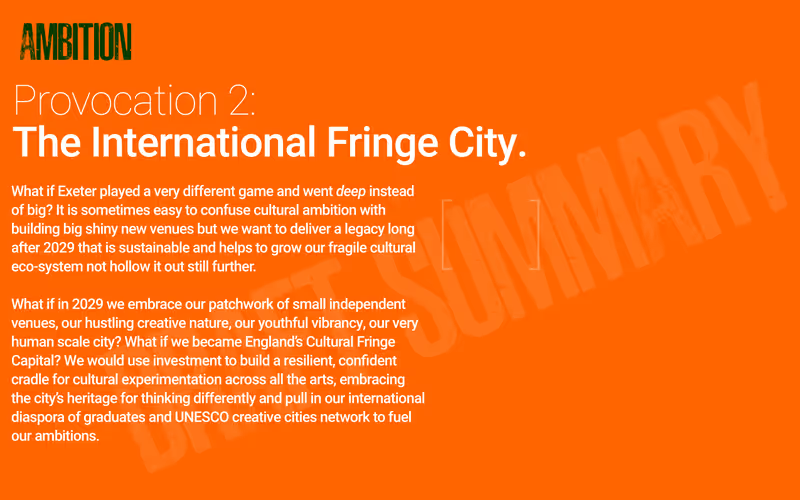 Exeter UK City of Culture draft bid “provocation” #2
When it was published, the consultants’ summary of their findings from the workshops, interviews and public consultation that had taken place the previous year, which they called an “assessment of what you said to us”, started well.
It says many respondents cited Exeter’s physical setting, friendliness and small, walkable scale as real strengths.
But most of what it captures is strong criticism. It says “severe traffic and transport issues” was “one of the most significant and consistent negative themes” among responses, with problems caused by unreliable bus services and “extortionate” parking charges deterring cultural engagement, especially during the evening, and “uncontrolled development” blamed for making it worse.
It also found a “widespread feeling that the city’s cultural offering is limited, lacks scope and does not fulfil its potential compared to neighbouring cities” with “the lack of a central, large-scale theatre and concert venue” identified as a “major point of frustration” and a lack of independent art galleries and live music in pubs and a “perceived inability to value and support professional musicians”.
Significant challenges for creative professionals were identified, including a “desperate lack of funding limiting professional opportunities” which are “few and far between”, a lack of affordable workspace and a creative community which was “often described as small, fragmented, and insular”.
It found that “many people feel unsafe to go out alone after dark and express feeling unsafe in the city centre”, parts of which were “frequently described as run down, with visible under-investment”.
Institutional dynamics are also identified as a problem, including a perception that Exeter caters “far more for transient students than for the local population”.
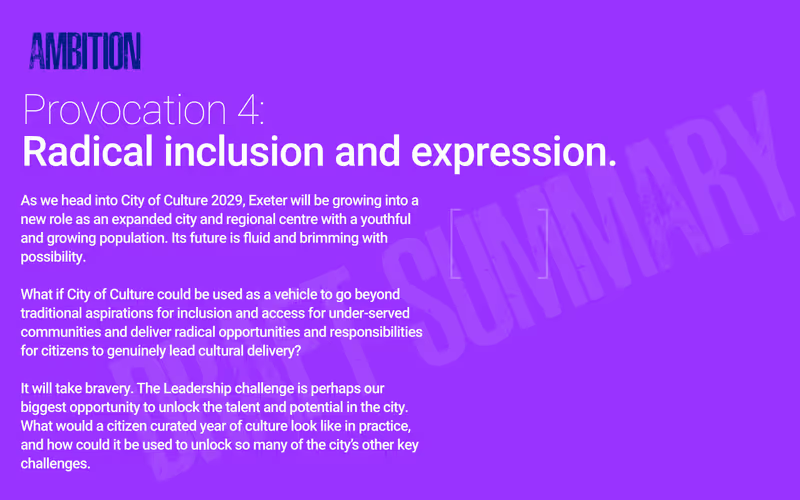 Exeter UK City of Culture draft bid “provocation” #4
The consultants’ report also captures specific challenges from the perspective of the city’s cultural practitioners.
It says the dominant theme was the “overwhelming difficulty in earning a living wage” which makes it “increasingly untenable to sustain a creative professional life in Exeter”, with some people working seven days a week across several jobs to sustain their practice.
It found that “unaffordable rent/house prices mean that even creative degree graduates are forced into administrative, non-creative jobs to afford to live in the city” and that “creatives face acute limitations concerning physical space, forcing them to rely on make-shift arrangements or to abandon local projects”.
It also found that it is a “structural necessity” for many practitioners to seek commissions in other cities and that young people “often have to move away to pursue opportunities” and “seldom return”. The “general wisdom” at college level, it says, is that students “will need to leave Devon to have a good chance at a career in media or art”.
It identifies institutional limitations including the closures of the 150-year old art school and the university music department as well as the loss of Dance in Devon, and says there is a need for “practical, low-cost support that fosters organic growth rather than top-down schemes” and an organisation capable of driving forward a city-wide culture sector renewal.
Its list of “key challenges and blockers facing cultural organisations in Exeter over the next 1-5 years” is, as it says, “extensive”.
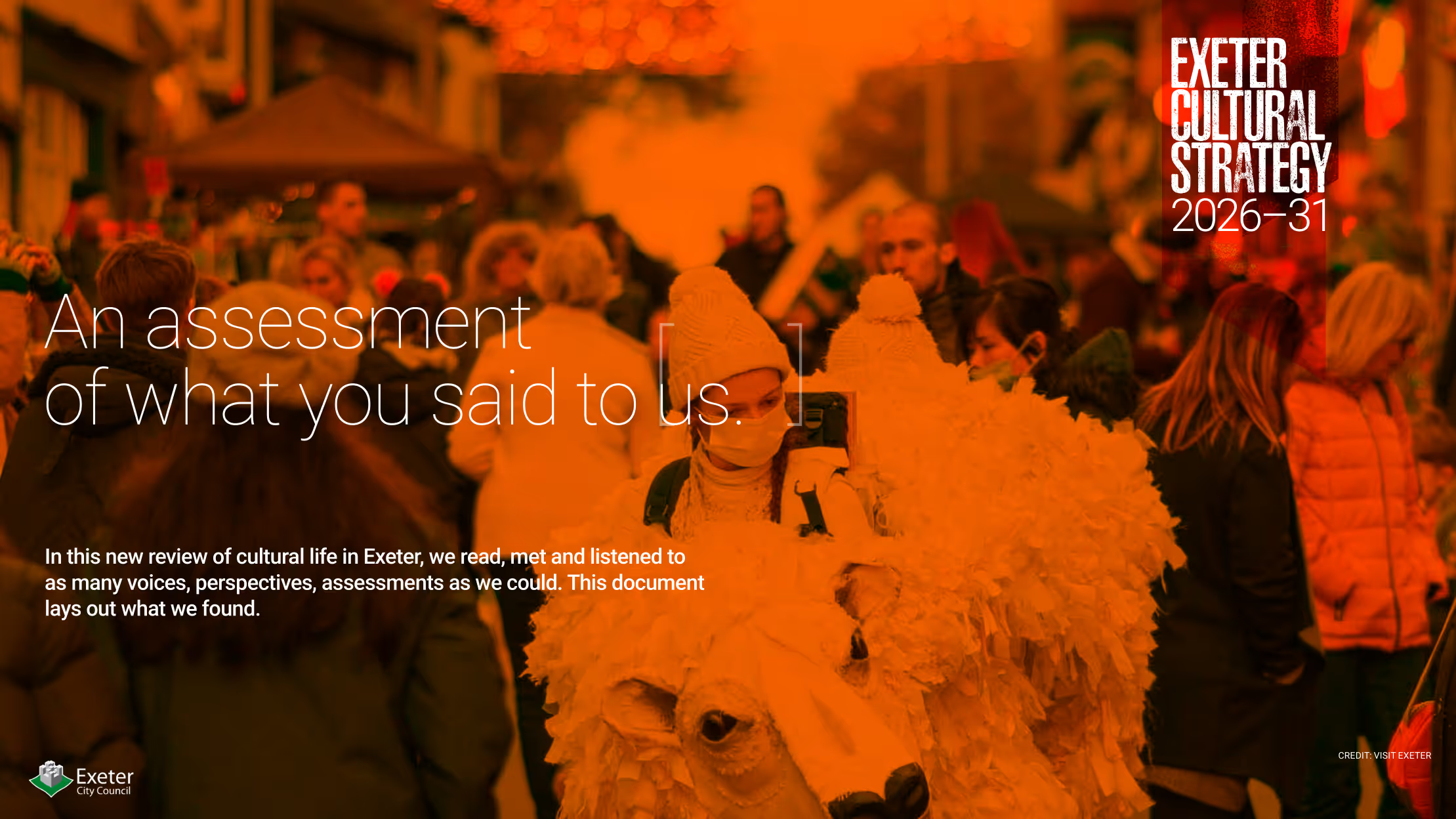 Exeter Cultural Strategy 2026-31 engagement assessment
The finished draft of the new strategy was supposed to be ready for the council’s executive committee to approve a final consultation on its contents in February. The extra workshops held after the January event meant the decision was postponed to the end of April.
When the committee did eventually meet to sign the consultation off, Ian Collinson claimed that local government publicity restrictions prevented him sharing the finished strategy draft with the committee because the local election campaigns were, by then, under way.
He didn’t explain why, if the consultation on the strategy could not begin until after the elections, had already been delayed by two years, and the council didn’t intend to adopt the strategy until October, the executive committee urgently needed to approve it before the elections took place.
According to Ian Collinson’s scant summary report to the committee, InPlace Consulting had also provided a “framework for a detailed action plan, investment plan and monitoring and evaluation plan” for the strategy, which was to be developed “in partnership with the city’s key stakeholders and partners” following the strategy’s adoption.
Buried in an accompanying impact assessment, however, was the admission that the action plan would, in fact, be assembled by the “Connected Culture” sub-committee – and so in private and without any public records of what was said or who had taken part.
Then still-city councillor Laura Wright asked who the members of the sub-committee were and how they had been chosen, apparently having not been informed about its meetings despite her role as deputy council leader.
Ian Collinson replied that the sub-committee members had been chosen by members of the board – which is unelected and meets in private – with additional “self-selected” members as the sub-committee members see fit. But he didn’t say who any of them were.
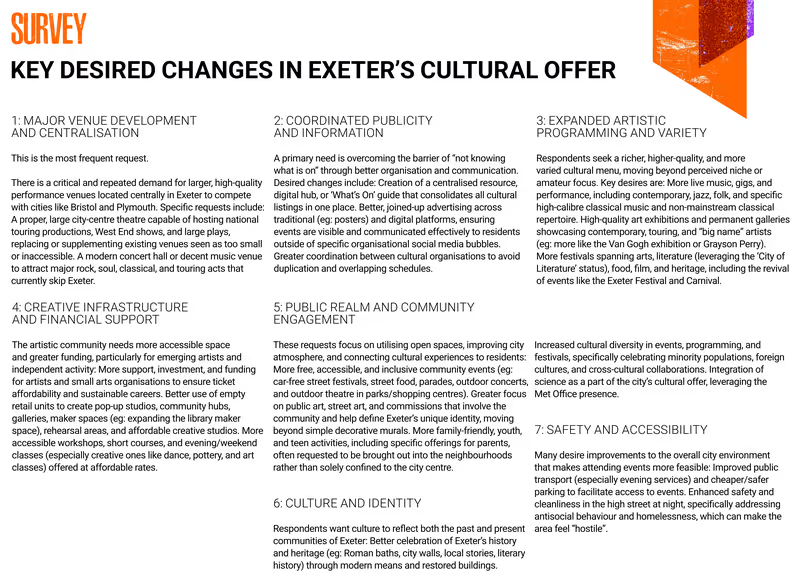 Exeter Cultural Strategy 2026-31 engagement assessment key desired changes
According to documents released under freedom of information legislation, only four people attended the “Connected Culture” sub-committee’s first meeting in March last year.
They were hereditary peer Charles Courtney, University of Exeter creative industries lead Dom Jinks, then still-city councillor Bob Foale and city council arts and events officer Sophie Constant.
Arts Council England relationship manager Victoria Allott, Northcott Theatre marketing director and joint-CEO Kelly Johnson, Exeter City of Literature executive director Anna Cohn Orchard and Claire Toze, city council tourism and marketing manager, also attended its second meeting last May.
Someone from Exeter College also went to its September meeting, but the council redacted the names of most of those who attended in the records it released so we don’t know who it was.
More redactions obscured the sub-committee’s December meeting records, although we do know that Devon and Exeter Institution director Emma Dunn, Exeter College media and performing arts faculty head Katie Wild and RAMM collections manager Julien Parsons were all also there.
When it came to releasing the records of January’s sub-committee meeting, however, the city council simply deleted the names of everyone who had taken part.
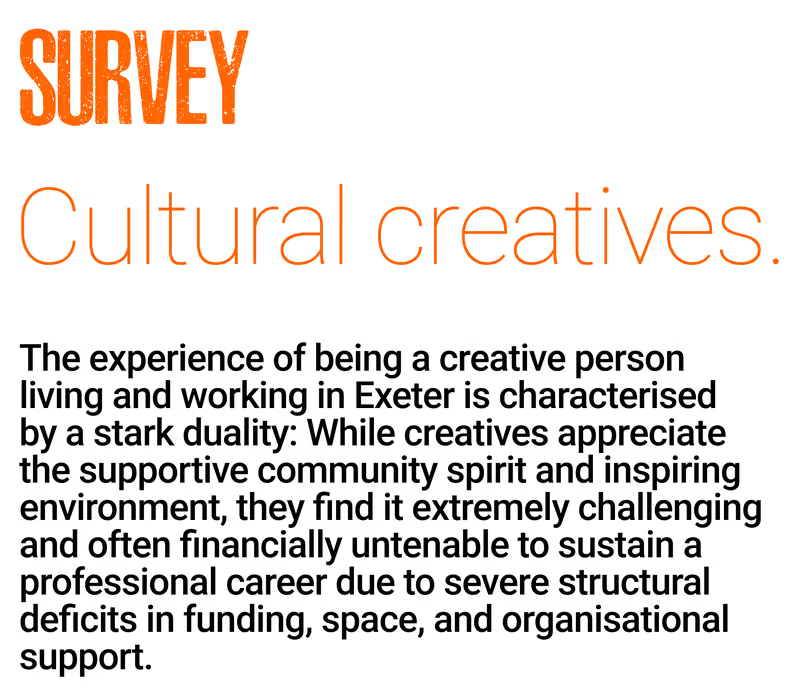 Exeter Cultural Strategy 2026-31 engagement assessment pullquote
Undeterred by the culture of secrecy surrounding the strategy, the city council executive committee members approved the consultation on the finished draft in April.
Apart from Bob Foale, who was standing down as a councillor nine days later so wouldn’t have to answer for its contents when it did appear, it seems that the rest of the committee members had not only not seen the document but were also in the dark about who would be developing the missing action plan – and so deciding what, if anything, would happen once the strategy was adopted.
This action plan was also originally supposed to come before the April executive committee meeting for approval but, like the many other decisions the council says it is going to take then does not, the related agenda item simply disappeared from the executive forward plan without an explanation.
It was still absent when the draft strategy was eventually published last month, as the consultation began. Except that “consultation” is not the right word as the city council, like most of its “consultations”, is instead inviting respondents to fill in a multiple-choice survey designed to prevent dissent.
This particular survey only offers a mixture of compulsory Likert scale and pre-determined ranking options, a couple of pre-populated tick box exercises and five leading questions, responses to which are limited to less than 100 words.
The council evidently thinks it already knows everything it needs to know about Exeter’s cultural sector. Ian Collinson said, at the April meeting, that it was “absolutely confident” that it had “captured pretty much everything that people thought was important to feed into the strategy”.
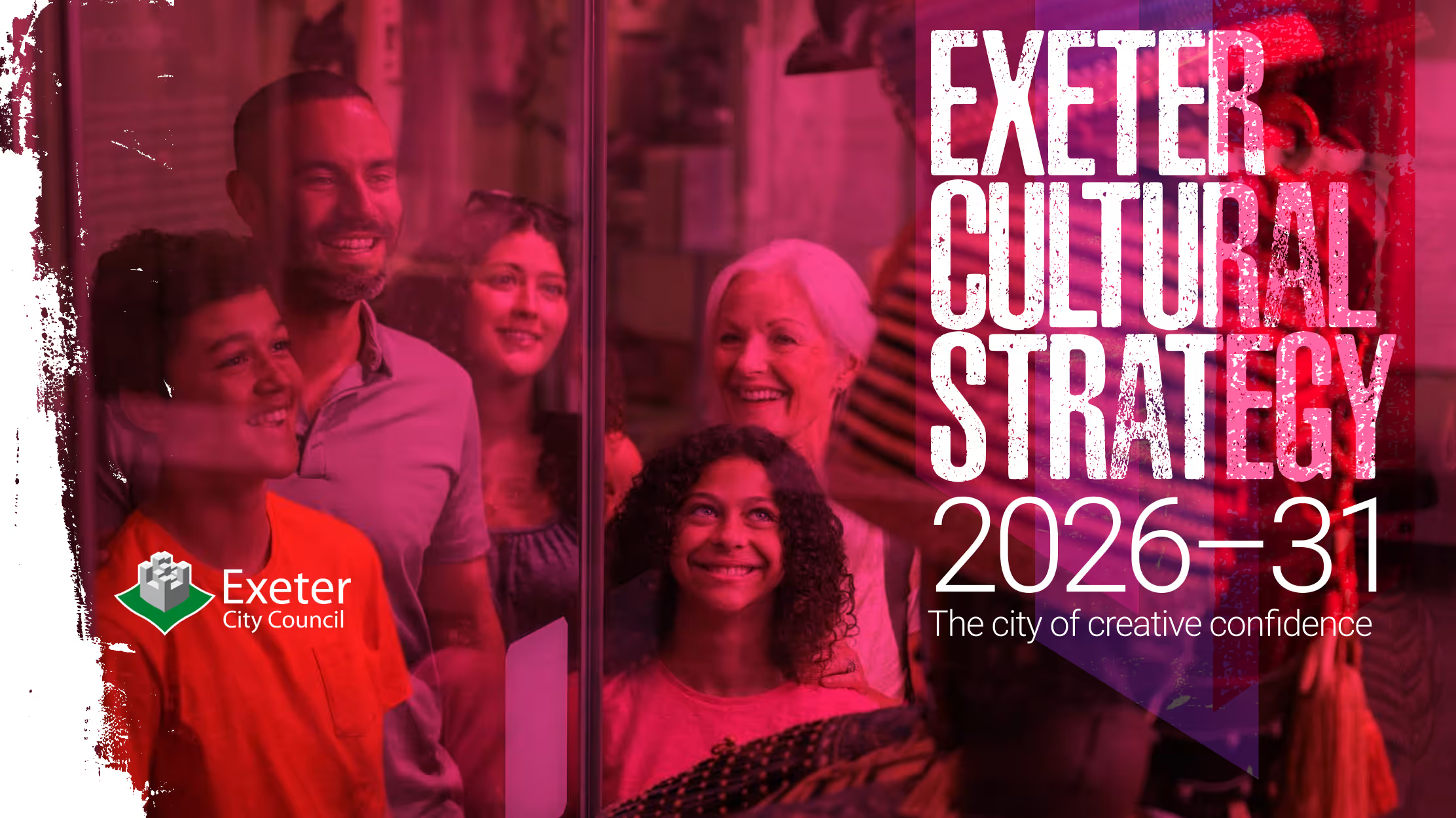 Exeter Cultural Strategy 2026-31 consultation version
The strategy omits to mention, however, any of the many challenges facing the city’s creative practitioners – or those facing potential audiences – which were identified in both the consultants’ baseline report and engagement assessment.
Instead, the council’s new cultural strategy offers a word salad of aspirational intentions in which almost every aim, method and outcome is described in ways that are impossible to pin down. There are no commitments, financial or otherwise, no delivery mechanisms and the prose is riddled with weasel words.
The “vision statement” which frames the strategy goes like this: “Exeter will be a place where everyone feels more creative confidence – included and connected to culture, environment, heritage and exploring new ideas.” Apart from the grammatical offences this sentence commits, what exactly does it propose?
In answer to the question “what happens next?” the strategy says, absurdly: “The priority is to work with key partners and stakeholders to support the city’s cultural ambitions. Now it’s time to help each other write the next stories of Exeter’s people and their futures with new creative confidence.”
These statements bookend a clutch of four strategy-shaped “themes”. Each vaguely expresses seemingly-desirable outcomes but fails to state specific priorities, concrete actions, measurable objectives, resource commitments, timescales, responsibilities, or measures of success.
The council even says it still hopes to be “recognised” as a “city of culture”, a phrase it apparently thinks of as little more than a marketing slogan.
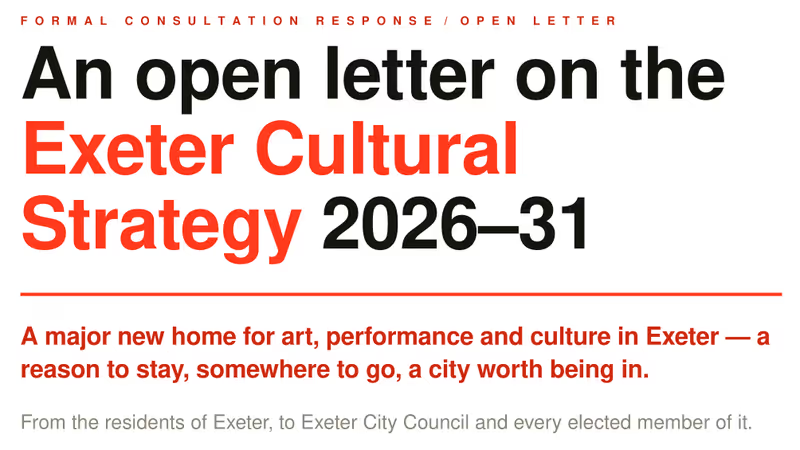 Wake Up Exeter open letter response to draft cultural strategy 2026-31 consultation
Exeter’s creative practitioners evidently do not intend to take this treatment lying down. A nineteen-page open letter written in response to the “consultation” lays out a passionate, pointed and persuasive plea for the city council to play the cultural leadership role it so often claims but so rarely fulfils.
The letter says it has been published because “the strategies that have been put to consultation will not, on the evidence, produce the change Exeter needs”.
An accompanying campaign website presents a provocation with considerably more relevance and clout than the city council’s feeble UK City of Culture bid flashcards.
It says: “Exeter has everything a great city needs. And by half past five, the heart of it falls asleep. A cathedral that defines the skyline. The historic quay. A world-class university. The coast and Dartmoor right on the doorstep. Other cities would kill for this. So why does the capital of Devon empty out before the evening even starts?”
The council’s clueless cultural strategy doesn’t even seem to know that it should be asking this question, let alone setting out to answer it.
The city council “consultation” on the draft Exeter Cultural Strategy 2026-2031 is open until Monday 29 June.
The Wake Up Exeter website links to WriteToThem to enable residents to contact their elected representatives about the strategy directly.