Exeter City Council has confirmed that the first phase capital cost of its Whipton Gardens housing project is to exceed £12.5 million – an average build cost of £364,000 for each of the block’s 35 one and two-bedroom flats.
In a 2025-26 financial year-end report to Tuesday’s council meeting it confirmed that it had spent just over £2.6 million on capital development costs by the end of the year, in addition to the nearly £10 million it had spent by the end of March 2025.
It is also due to pay a £200,000 contractor retention payment in 2026-27.
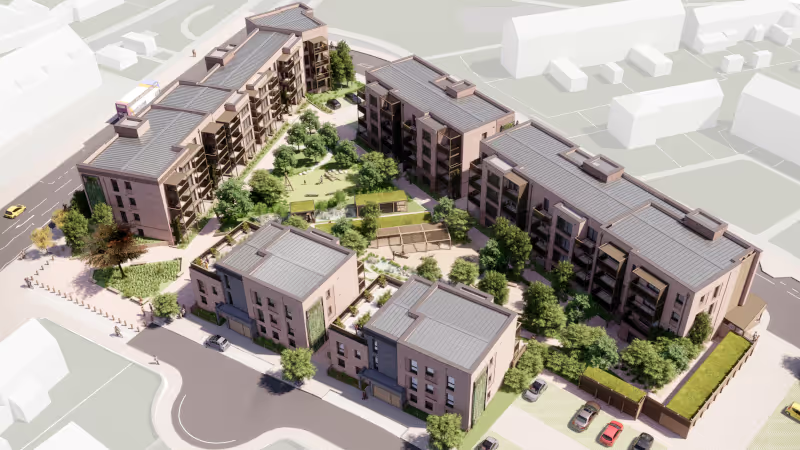 Whipton Gardens consented scheme illustrative view
The Whipton Gardens scheme, which Exeter City Living originally said it would complete by November 2020 before the council-company got into trouble and was eventually all-but wound up with losses of around £4.5 million, was to deliver 92 flats in three blocks.
One third of the flats were to be sold privately and the other two-thirds to the council for social housing.
The council allocated £9.2 million to buy 60 of the flats in October 2019, at the same time confirming its purchase of the county council care home that occupied much of the two-acre site for an undisclosed sum.
However by the time building work began in April 2023 the council had committed itself to buying all the flats and had increased the project budget to £27.2 million.
The scheme was then divided into three phases, with one flat removed, and the budget was increased again, to £36.2 million, before Exeter City Living collapsed and a replacement contractor was found to take over.
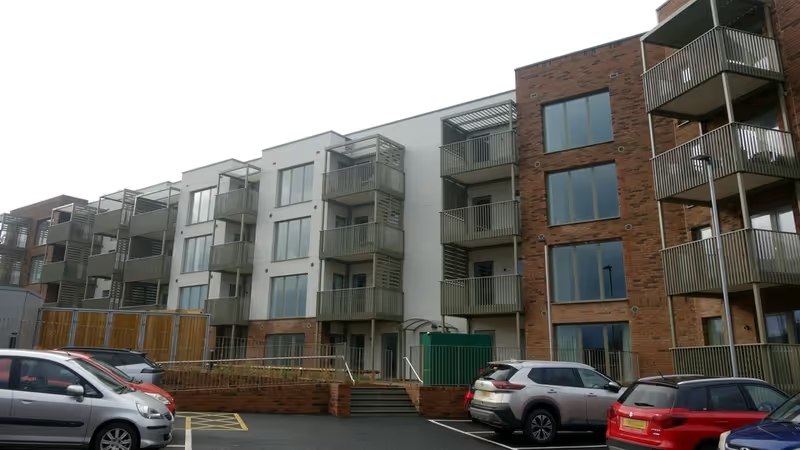 Whipton Gardens phase one flats
During first phase construction, which finished in the autumn, the council spent another £2.8 million on groundworks for the remaining phases of the project, a block of sixteen flats beside Hill Lane and a block of 40 flats beside Vaughan Road.
It said that completing these groundworks early would “deliver the overall scheme more efficiently” then, later, that they had been approved “as they offered programme advantages and continuity to the overall scheme”.
However in its financial year-end report to this week’s council meeting it said that, while the second phase of the project had been approved, project financing had “not yet been finalised”. Nor does any future capital budget provision appear for the second and third phases of the project.
A corporate performance report to next week’s council executive meeting nevertheless claims that second phase building work will begin next month, with “anticipated completion late 2027”.
The fate of the third phase of the scheme is not on the agenda.
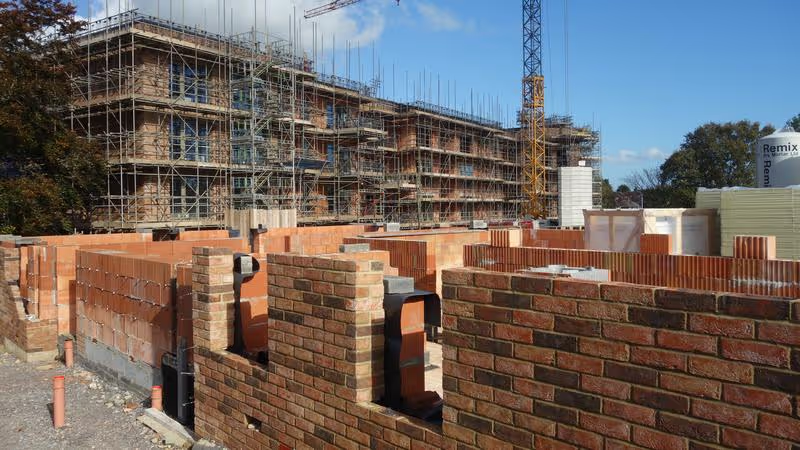 Whipton Gardens phase two groundworks
Meanwhile the cost of demolishing Rennes House, an eleven-storey block of flats which towers over the Whipton Gardens development site, has risen to more than £1 million.
A council officer told this week’s council meeting that an additional £770,000 would be needed following an invasive survey of the prefabricated concrete block, which was completed in 1968 for Exeter City Council’s predecessor.
The survey had found much more asbestos in the building – which Exeter City Living originally planned to refurbish – than the council had expected.
He also said the demolition had been delayed following a dispute over the removal of telecoms equipment on the roof which had resulted in significant legal fees as well as additional site security costs.
At the same time, the council continues to operate Exeter City Living as a residential rental management company.
It does so because council leader Phil Bialyk and then-council CEO Karime Hassan decided to set the company up as landlord of six rented flats the council acquired at the Guildhall shopping centre when the council bought back its leasehold in 2022 to prevent the tenants acquiring the right to buy.
However this arrangement, because the council stopped short of dissolving the company, also means that the £4.4 million the council lost on the company still sits on the company’s balance sheet.
Another report to this week’s council meeting said that despite a “significant reduction in operating costs compared with the prior year”, Exeter City Living’s “net rental income position has been impacted by increased turnover in tenants compared with prior years” which had “resulted in increased void periods” at the Guildhall flats.
The extract from the company’s 2025-26 accounts which accompanied the report show that its turnover for the year was just £16,000 – £2,675 per flat – against operating costs of £20,000 with £4,000 of bank interest keeping its net £100 operating loss from being any larger.