A five-day strike by resident doctors in England – formerly known as junior doctors – is taking place from Wednesday 17 to Monday 22 December after British Medical Association members rejected an offer from health secretary Wes Streeting as “too little, too late”.
The strike involves resident doctors from the Royal Devon University Healthcare NHS Foundation Trust which operates hospitals across the county including Exeter Community Hospital in Whipton, Nightingale Hospital in Sowton and the Royal Devon and Exeter Hospital in Heavitree and Wonford.
It is the fourteenth round of industrial action since March 2023 in an ongoing dispute between the British Medical Association and the government. It follows a five-day strike held last month.
The BMA confirmed yesterday that this weeks’ strike, which was announced on 1 December, would go ahead after 83% of its resident doctor members voted to continue as planned in a poll in which two-thirds of them participated.
The poll was held after the government attempted to avert the strike last Wednesday. It offered what it said would be 3,000 additional places over the next three years for hospital doctors to train in their specialist medical practice area.
The NHS 10 year health plan proposed only 1,000 additional places when it was published in July despite 40,000 doctors currently competing for 10,000 training places each year, a situation the BMA describes as a “looming unemployment crisis”.
The BMA said that the additional 3,000 places would actually be existing health service roles that would be “repurposed” and would not increase the number of working doctors.
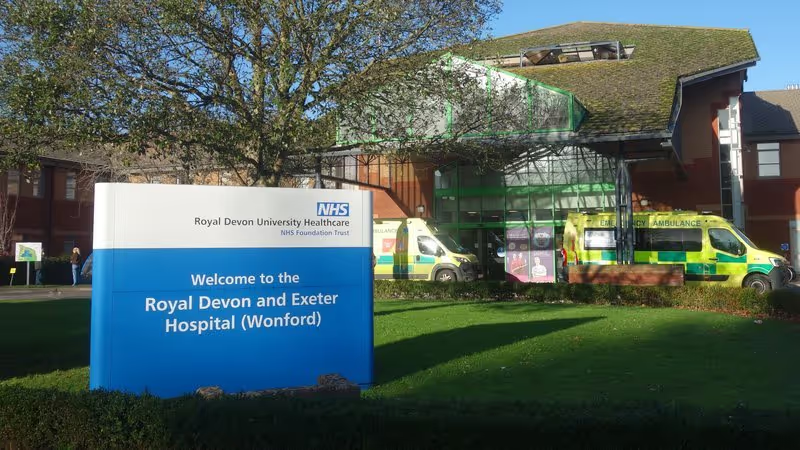
 Royal Devon and Exeter Hospital in Wonford
Wes Streeting said last week that the BMA decision to poll members over whether to continue with the strike following the government offer was “playing games with patients’ lives”.
Prime Minister Kier Starmer then said the strike is “reckless” in the context of what he described as record hospital flu admissions and “the NHS’s most precarious moment since the pandemic”.
The BMA responded over the weekend, inviting the health secretary to “focus on securing a deal to stop the strikes rather than scaremongering the public”.
When the BMA published the strike poll results yesterday, resident doctors committee chair Jack Fletcher said they should “leave the health secretary in no doubt about how badly he has just fumbled his opportunity to end industrial action. Tens of thousands of frontline doctors have come together to say ‘no’ to what is clearly too little, too late.”
He added that Wes Streeting “should now work with us in the short time we have left to come up with a credible offer to end this jobs crisis and avert the real-terms pay cuts he is pushing in 2026”, referring to the 2.5% below-inflation doctor’s pay rise the government proposed last month.
 Royal Devon and Exeter Hospital in Heavitree
The BMA campaign for increased pay began in June 2022 after a vote at its annual conference, with its first strike action taking place in March 2023. Six more walkouts followed before a nine-day strike was held either side of Christmas that year, the longest strike in NHS history.
Resident doctors then took further industrial action last year, including going on strike a week before the July 2024 general elections.
Shortly afterwards the BMA entered negotiations with newly-appointed health secretary Wes Streeting and voted to accept the resulting pay deal, which covered 2023-24 and 2024-25, in August.
However in July this year doctors staged another five-day walkout after they said Wes Streeting “did not go far enough” on subsequent “pay and non-pay elements”. The BMA said it had received “a series of no’s - no to movement on pay, no to student loan forgiveness, no to any credible move forwards”.
The BMA opened a ballot on further strike action last week. If its members vote in favour, a mandate on industrial action would be in place until August next year.
The latest strike begins at 7am on Wednesday 17 and ends at 7am on Monday 22 December.
Royal Devon University Healthcare NHS Foundation Trust advice is to attend planned appointments as normal unless informed otherwise.
Emergency departments and minor injury units will remain open throughout the strike but the public are advised to visit their local pharmacy or GP for medical problems that are not critical or life-threatening.
Anyone with symptoms of a respiratory infection, nausea, vomiting or diarrhoea is asked not to visit any of the trust’s hospital sites to help protect patients and staff.
According to official advice distributed to hospital managers NHS England is aiming to deliver 95% of normal health service activity levels during the strike, as it has done in the past.
Resident doctors – hospital doctors who are not consultants – make up about half of all hospital doctors in England.